Hamilton's Ferrari Simulator Gamble Paying Off in Montreal
Sat, 23rd May, 2026
Hamilton's Unconventional Approach Yields Results
Lewis Hamilton is doubling down on a strategy that sounds almost reckless for a driver adjusting to a new team, but the numbers suggest he's onto something. After posting an impressive performance in Canadian Grand Prix Sprint Qualifying in Montreal, the seven-time world champion has decided to stick with his decision to skip Ferrari's simulator sessions.
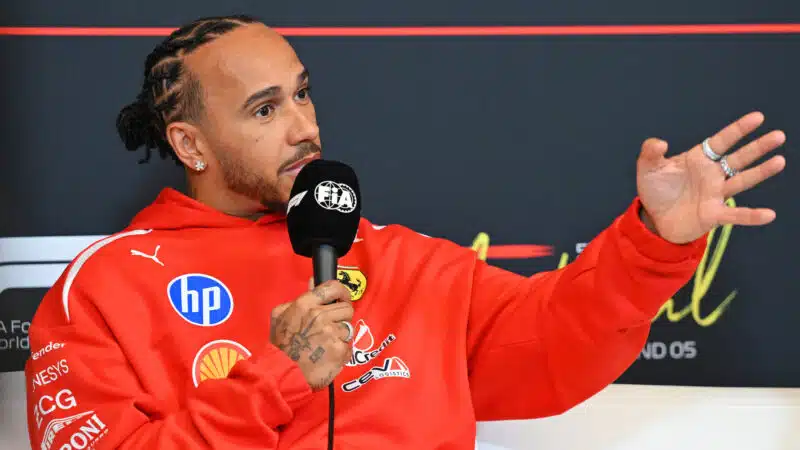
"I've felt the best I've felt all year," Hamilton told reporters after his strong showing. "Not using the simulator is the way forward for me." It's a bold statement from someone who only joined the Scuderia in January, replacing the departing Carlos Sainz. Most drivers treat simulator time as sacred, a chance to dial in setups and practice race scenarios before stepping into the car for real. Hamilton's choice to largely avoid it appears to be working differently for him.
Breaking with Convention in Formula 1
The simulator has become a cornerstone of modern Formula 1 preparation. Teams invest millions in state-of-the-art facilities where drivers can replicate everything from qualifying conditions to race strategies without burning fuel or risking hardware. Engineers collect data and drivers build confidence. It's the sensible approach.
Hamilton's willingness to reject this established methodology raises eyebrows, but his reasoning seems sound. Some drivers find the simulator environment creates muscle memory that doesn't translate cleanly to the real car. The feedback delays, the visual cues, the physical sensations, the way a real chassis responds to inputs through hundreds of micro-adjustments around a lap. Nothing mimics that perfectly, no matter how advanced the technology. For a driver of Hamilton's experience and adaptability, perhaps real-world track time and mental preparation matter more than hours spent staring at screens.
The Montreal Sprint Qualifying result gives his approach credibility. On a circuit where Ferrari should theoretically be competitive, Hamilton demonstrated the speed to challenge for positions. In his first few months with the team, such performances have been somewhat inconsistent. Flashes of brilliance mixed with sessions where he struggled to extract the car's potential. This time felt different.
Mental Edge Over Physical Data
What's fascinating about Hamilton's approach is how it reflects his maturity as a driver. At 39 years old, with nearly two decades of Formula 1 experience, he's confident enough to trust his instincts. His mental approach to adapting to new cars and setups has always been a strength. Rather than drowning himself in simulator data that might create confusion about how the Ferrari actually feels in various conditions, he's choosing to focus on understanding the car through real laps and thoughtful analysis.
This strategy requires exceptional self-awareness. It also requires good luck. A bad qualifying session or a crash in practice couldn't have been brushed off as easily. The risk would have seemed foolish. But when the approach produces the goods, it looks visionary. That's where Hamilton finds himself now. His confidence is building from successful track sessions, not from completed simulator programs with perfect lap times.
Ferrari's engineering team must be watching this closely. They've provided Hamilton with access to their simulator, as they would any driver. The fact that he's choosing not to use it heavily says something about his comfort level with the current setup direction. Or perhaps he's communicating that he learns faster through conversation with engineers about what needs changing, then testing changes on track, rather than chasing phantom data points from a computer.
The Montreal Moment
The Canadian Grand Prix has always suited Hamilton well. He won here multiple times during his Mercedes years, and he clearly still has that extra edge around Montreal's unique circuit. It's fast, flowing, and doesn't demand the extreme downforce efficiency that some modern F1 cars struggle with. The Sprint Qualifying performance, therefore, could be viewed as Hamilton shining in favorable conditions.
But he's aware of that context too. He's not claiming he's suddenly the fastest driver on the grid because of one good session. What he's saying is that his approach to preparation feels right. That his rhythm has improved. That he's not fighting himself trying to reconcile simulator expectations with real-car reality. For someone settling into a new team mid-career, that's significant progress.
Looking Ahead
Whether Hamilton maintains this no-simulator approach for the rest of the season remains to be seen. If form dips significantly, he might reconsider. But for now, he's got the bit between his teeth. Ferrari gave him the freedom to approach his preparation his own way, and he's using it. That kind of autonomy, especially at a new team, can be incredibly important for driver performance.
The real test comes in the race weekends ahead. Sprint qualifying success converts to victories and championship points when combined with strong race day performances. Hamilton hasn't forgotten how to win. He just might have found a way to get back to his best by refusing to do what everyone expects him to do.