Infantino Denies Hydration Breaks Are Money Grab for FIFA
Wed, 24th Jun, 2026
Infantino Sets Record Straight on Hydration Breaks
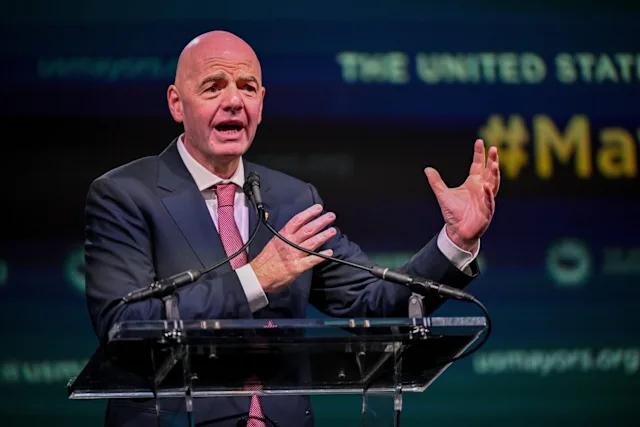
FIFA president Gianni Infantino has pushed back against suggestions that the introduction of hydration breaks at the World Cup is a revenue-generating scheme for the governing body. Speaking directly on the matter, Infantino emphasized that these breaks are rooted purely in player welfare and sporting considerations, with absolutely no financial benefit flowing to FIFA's coffers.
The clarification comes at a time when various rule changes and tournament innovations have faced scrutiny from observers questioning the motivations behind them. With billions of dollars flowing through international football, it's understandable that fans and analysts sometimes wonder whether decisions truly serve the game or simply line organizational pockets. Infantino's statement addresses these concerns head-on.
A Purely Sporting Decision
Hydration breaks have become a standard feature at major tournaments, particularly in hot climates where player safety becomes a genuine concern. When conditions reach extreme temperatures, teams are granted official stoppages to allow players to rehydrate and receive medical attention if needed. These aren't marketing gimmicks or advertising opportunities designed to squeeze extra revenue from broadcasters.
The inclusion of these breaks reflects football's evolution in understanding athlete health and performance optimization. Modern sports science has demonstrated conclusively that proper hydration directly impacts player endurance, decision-making, and injury prevention. What might have seemed like unnecessary coddling twenty years ago is now recognized as essential sports medicine.
Tournament organizers, medical teams, and FIFA's advisory bodies have collectively determined that hydration breaks represent best practice in player management. The decision to implement them comes from experts concerned with competitive fairness and athlete safety, not from boardroom discussions about alternative revenue streams.
The Business Reality
While Infantino's assertion that hydration breaks generate no additional revenue might seem self-evident, it's worth examining why someone would need to make such a declaration in the first place. FIFA's business model relies heavily on broadcasting rights, sponsorships, and ticket sales. These revenue sources are tied to the fundamental structure and length of matches, not to tactical stoppages for player welfare.
A hydration break doesn't add significant time to a broadcast that broadcasters weren't already paying for. It doesn't create new sponsorship opportunities beyond existing pitch-side advertising. It doesn't increase stadium capacity or ticket prices. In fact, one could argue that from a pure financial perspective, stoppages represent minor inefficiencies in the product FIFA sells to media partners.
Infantino's statement essentially confirms that FIFA accepted these breaks despite having no direct monetary incentive to do so. The decision came because it was the right thing to do for player welfare, not because it represented some clever monetization scheme.
Transparency in Modern Football Governance
The fact that the FIFA president felt compelled to address this topic publicly reflects broader conversations about governance in professional football. The sport has faced numerous controversies regarding decision-making processes, financial transparency, and the alignment of organizational interests with competitive integrity.
By explicitly stating that hydration breaks bring no additional revenue, Infantino is attempting to demonstrate that FIFA can make player-centric decisions even when they don't directly benefit the organization financially. It's a straightforward assertion meant to counter the cynicism that increasingly characterizes fan and media attitudes toward FIFA's actions.
Whether such statements fully address the underlying skepticism is another matter entirely. Years of contentious decisions, from World Cup venue selections to controversial rule changes, have created a trust deficit between FIFA and many stakeholders in the game. One clarification about hydration breaks won't reverse that dynamic overnight.
The Broader Context
Hydration breaks exist within a larger conversation about how football adapts to environmental challenges and player welfare demands. Climate change is making extreme heat conditions increasingly common at major tournaments. The sport must find ways to manage these realities without compromising competition or fairness.
Different tournaments have handled this differently. The decision to incorporate scheduled breaks reflects a thoughtful approach to balancing the traditional flow of the game with modern medical understanding. It's not revolutionary, but it represents genuine progress in how football prioritizes athlete health.
Infantino's comments also come amid broader discussions about World Cup scheduling, the number of matches players are expected to complete in compressed schedules, and the physical toll of modern professional football. In this context, hydration breaks represent one relatively minor intervention among many considerations affecting player wellbeing.
Moving Forward
The inclusion of hydration breaks at future World Cups seems likely to continue. As global temperatures rise and climate patterns shift, such measures may become even more essential to tournament management. FIFA's medical advisors will continue evaluating whether current protocols sufficiently protect players while maintaining competitive integrity.
What Infantino's statement ultimately illustrates is that even in an organization frequently criticized for opaque decision-making, some choices are genuinely motivated by factors beyond profit. Hydration breaks represent players' interests taking precedence over scheduling efficiency or marketing optimization. It's a relatively small victory for those advocating for athlete-centered governance in professional football, but it's a victory nonetheless.